|
With the ever-increasing variety and quantity of chemicals used in modern society and frequent international trade, harmonizing chemical classification and labeling systems across countries has become a top international priority. The UN Conference on Environment and Development (UNCED) and the International Forum on Chemical Safety (IFCS) passed resolutions in 1992 recommending that countries pursue international harmonization of chemical classification and labeling, to reduce the risks chemicals pose to people and the environment and to cut the costs of complying with differing national labeling requirements in cross-border chemical trade. To this end, the International Labour Organization (ILO), the Organisation for Economic Co-operation and Development (OECD), and the UN Committee of Experts on the Transport of Dangerous Goods (UNCETDG) jointly developed the Globally Harmonized System of Classification and Labelling of Chemicals (GHS). After years of harmonization efforts, the GHS system documents jointly completed by these three international organizations were adopted and officially published by the United Nations in 2003.
The GHS system has 27 hazard classes (seeTable 1). Each class has detailed classification criteria, hazard communication label elements, and classification procedures. Compared with Taiwan's current nine hazard categories, classes such as flammable gases and flammable liquids share the same names and similar test standards, but the defined scopes differ. For example, GHS defines a flammable gas as one "having an explosive range with air at 20°C and standard pressure," while the hazard communication rules define it as "a gas that is combustible at 15°C under one atmosphere" — a much broader scope.
Table 1 GHS Chemical Hazard Classification
|
Physical hazards
|
Health and environmental hazards
|
|
Explosives
|
Acute toxicity |
| Flammable gases |
Skin corrosion/irritation |
| Flammable aerosols |
Serious eye damage/eye irritation |
| Oxidizing gases |
Respiratory or skin sensitization |
| Gases under pressure |
Germ cell mutagenicity |
| Flammable liquids |
Carcinogenicity |
| Flammable solids |
Reproductive toxicity |
| Self-reactive substances |
Specific target organ toxicity - single exposure |
| Pyrophoric liquids |
Specific target organ toxicity - repeated exposure |
| Pyrophoric solids |
Aspiration hazard |
| Self-heating substances |
Hazardous to the aquatic environment |
| Substances which, in contact with water, emit flammable gases |
Note: the terms above are taken directly from Taiwan national standard CNS 15030 Z1501 for chemical classification and labeling |
| Oxidizing liquids |
| Oxidizing solids |
| Organic peroxides |
| Corrosive to metals |
GHS labels contain six elements: hazard pictograms (seeFigure 1), signal words, hazardous ingredients, hazard statements, precautionary measures, and manufacturer or supplier information. The hazard pictograms (black symbols on a white background within a red diamond border) differ from the current labeling system (seeFigure 2), and adds health and environmental hazard pictograms; it also adds signal words and hazard statements (by hazard category). Hazards are ranked by severity, and each category requires its corresponding signal word and hazard statement.
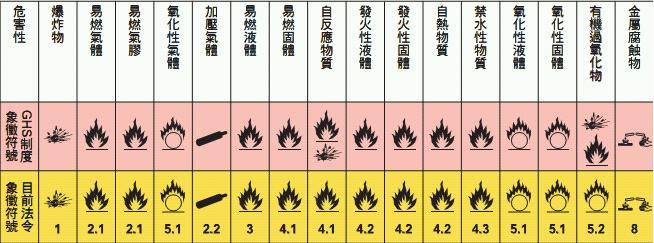 
Figure 1 Comparison of GHS pictograms with current regulations
Figure 2 GHS container labeling for hazardous substances
The Safety Data Sheet contains 16 sections, differing little from the current SDS format. Sections 2 and 3 are swapped, and several sections gain additional sub-items. For example, under Section 12 (ecological information), the current format has one sub-item (potential environmental impact/distribution) while GHS has five (ecotoxicity, persistence and degradability, etc.)
The list of regulated substances expands: currently there are six classes of dangerous materials (explosive, ignitable, oxidizing, flammable liquids, combustible gases, and explosives), and GHS adds three more — oxidizing gases, gases under pressure, and substances corrosive to metals. Harmful materials currently include organic solvents under the Organic Solvent Poisoning Prevention Rules, specific chemicals under the Specific Chemical Substances Hazard Prevention Standards, and others
Since the true spirit of GHS is to provide a globally consistent standard for chemical hazard classification, the UN hopes all member states will fully implement GHS by 2008, and APEC hoped members would implement it voluntarily by 2006, though this year's APEC Chemical Dialogue recommended postponing to 2008. If Taiwan follows international trends toward full implementation
|